Skip to content
Independent editorial — no affiliate links, no prices, no sponsored placements
SmartHomeVerdict
Robot Vacuums

Best Cleaning Setup for Pet Owners

If you share a home with a shedding animal, the useful question is not "which vacuum is strongest" — it is "which combination of tools stops hair from becoming part of the furniture".

Hair wrap, odour, and the tools that actually survive a shedding season. How to build a cleaning setup around a pet rather than around a vacuum spec sheet.

Last reviewed September 2026

What actually goes wrong in this situation

1Hair wraps around the brush, and cleaning slows to a crawl within days

This is the single biggest failure mode in a pet home. A brush roll that has collected a sleeve of hair cannot agitate carpet, so pickup collapses long before the machine breaks. Split and dual rubber brush designs are engineered to shed hair off the ends instead of winding it on, and the brands that publish a figure now state the length of hair the brush is rated to handle — eufy rates its DuoSpiral brush for hair up to 30 cm. A stated rating you can check against your own household is worth more than any airflow figure.

2The bin fills faster than you expect, and the robot stops getting used

Pet hair is bulky. In a two-pet home a small onboard bin can fill during a single clean, which is the reason a lot of robot vacuums end up parked in a cupboard. An auto-empty dock solves the chore that actually causes abandonment, not the one that sounds impressive in marketing.

3Odour returns to mop pads and carpet

A damp mop pad left in a dock grows bacteria within a day or two, and that smell then gets distributed across the floor. Pad washing at high temperature with a sensor that keeps washing until the water is clean, followed by warm-air drying, is the difference between a hygienic dock and a source of odour.

4Sofas and pet beds are untouched by a floor robot

Robots clean floors. Pet hair embeds in upholstery, and lifting it out requires mechanical agitation — a motorised tool with a brush. A handheld with a powered, self-cleaning brush tool is the tool that actually deals with a sofa, and it is the piece most pet owners skip.

The specifications that matter here

In this situation, most of the specification sheet is noise. These are the parameters that change the outcome, and what to look for on each.

ParameterWhat it meansWhat to look for
Stated tangle ratingHow the brush is designed against hair wrap, and — where a brand states one — the length of hair it is rated to handle. Brush design tracks satisfaction in a shedding household more closely than suction does.A specific rated figure, such as hair up to 30 cm, or a split/dual rubber brush design. Treat the bare phrase "anti-tangle" as marketing until a number accompanies it.
Auto-empty dock capacityHow long the dock holds debris before you touch it. Pet hair fills bins quickly, so the interval matters more than in a pet-free home.70 to 75 days is the current top end in this comparison. Anything under 30 days means regular attention.
Mop pad washing temperature and dryingHot-water washing with a dirt sensor removes grease and residue; warm-air drying prevents the damp-pad smell that returns odour to the floor.Hot-water wash plus heated drying. Cold rinse with no drying is the combination that smells.
Carpet agitation and chassis behaviourOn rugs, what matters is whether the brush keeps contact with the pile. A chassis that lifts the body maintains contact; a robot that ploughs into the rug loses it.A lifting chassis on mixed floors, and honest expectations on deep pile — no robot matches a corded upright there.
Sealed filtration on the handheldPet dander is a fine particle. A handheld that leaks dust back into the air moves the problem rather than solving it.Sealed filtration rated to 0.3 microns if anyone in the home has allergies, and always empty the bin outdoors.

Our recommendations for this situation

Pick 1Best mopping
Roborock Qrevo Curv 2 Flow robot vacuum

Roborock Qrevo Curv 2 Flow

9.0 / 10Editorial score 9.0 out of 10

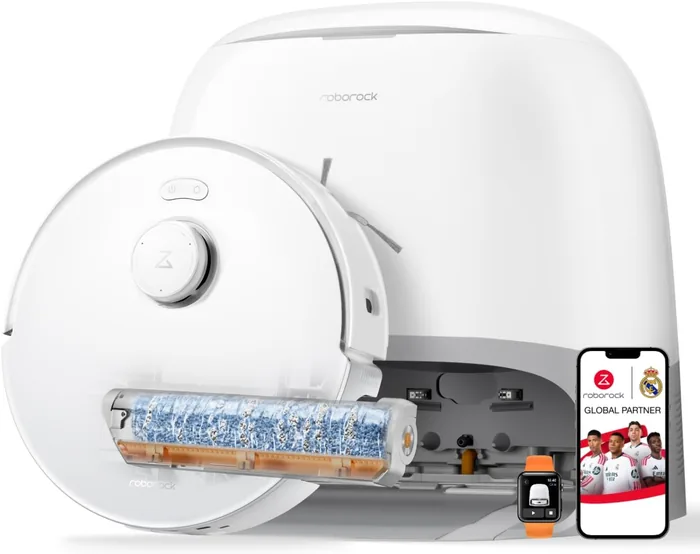
The tangle case, and the reason it is first. Roborock fits a dual zero-tangle system, so both the main brush and the side brush are designed against hair wrap rather than only the roller. It pairs that with a self-rinsing roller mop: eight hydration points feed clean water to the roller as it turns, so the surface touching your floor is not progressively dirtier. The dock auto-empties, washes the mop and dries it, and on mixed floors the mop lifts up to 15 mm so a carpet run does not become a wet run.

Where it falls short: The roller mop and dock consumables are an ongoing cost in a pet home, and Roborock does not publish a height for this model — so if your pets shelter under a low sofa, confirm clearance before buying. Pair it with a handheld for upholstery and under-furniture work.
Pick 2Best for apartments
eufy C28 robot vacuum

eufy C28

8.7 / 10Editorial score 8.7 out of 10

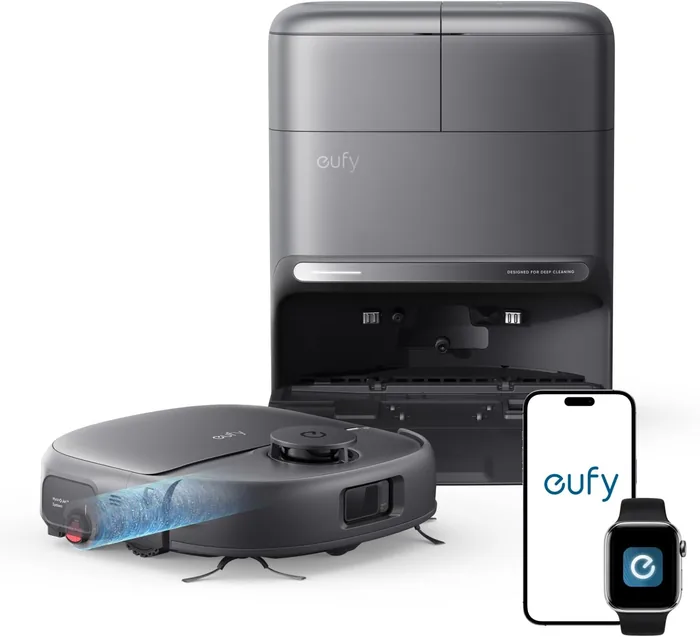
The pick when the deciding number is hair. eufy rates its DuoSpiral brush for hair up to 30 cm without wrapping, which is a figure you can check against your own household rather than a vague claim. It backs that with a station that auto-empties into a 3 L bag rated for about 75 days, washes the roller mop and hot-air dries it at 50 °C — the combination that prevents the damp-pad smell which otherwise puts odour back on the floor. Navigation uses no cameras at all, which some buyers will value for its own sake.

Where it falls short: At 15,000 Pa it carries the lowest published suction of the models we headline, so it is not the choice for deep-pile carpet. A camera-free robot also avoids obstacles by proximity rather than by identifying them — it cannot recognise a pet accident the way a camera system can.

Pick 3Best overall
Levoit VortexIQ Pro cordless handheld vacuum

Levoit VortexIQ Pro

8.9 / 10Editorial score 8.9 out of 10

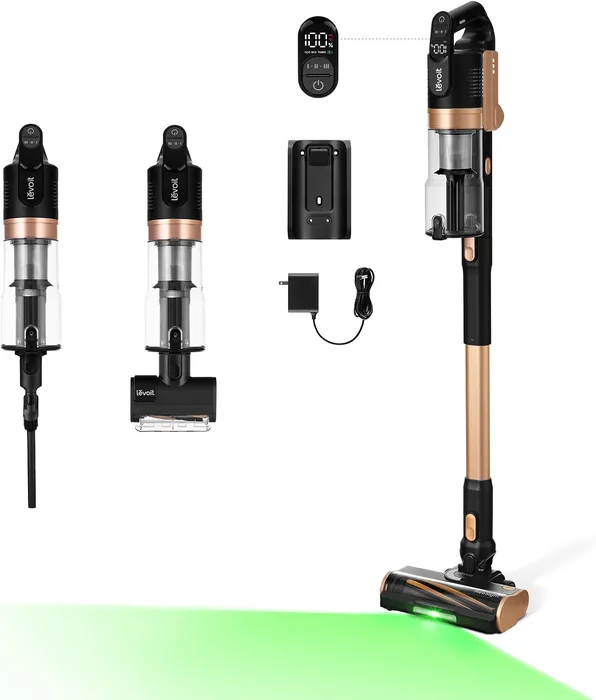
The upholstery half of the setup, and the piece most pet owners skip. It is the one handheld here that includes a mini motorized brush for fabric — the tool that actually lifts hair out of sofas, pet beds and stairs, none of which a floor robot touches. It adds NeoSight green-light illumination that makes fine dust and hair visible against a surface, an anti-tangle TripleStrike roller, five-stage HEPA filtration for dander, and a body that lays flat to 180° to reach under low furniture.

Where it falls short: The published 60-minute runtime is measured with the crevice tool, not the powered floor head, so expect materially less doing real work. Weight is not published, and it is the most expensive handheld in our comparison.

Questions about this situation

The follow-ups we get most often once the shortlist is decided.

Do robot vacuums actually work with pet hair?

Yes, for maintenance on floors — but only if the brush does not wrap. Split or dual rubber brushes and comb-style rollers are designed to shed hair off the ends instead of winding it on, and where a brand publishes a rating it does so as a maximum hair length: eufy rates its C28 brush for hair up to 30 cm, and Roborock fits a dual zero-tangle system covering both the main brush and the side brush. Those models keep working day after day, whereas a brush that collects hair loses agitation within a week — which is why a specific brush rating tells you more than a suction figure in a shedding household.

What is the best vacuum setup for a home with two shedding dogs?

Three pieces, in this order of importance: a robot vacuum whose brush is designed and rated against long hair, with an auto-empty dock rated for 70 to 75 days, so the daily job happens without you; a handheld with a motorised brush tool for sofas, pet beds and car seats — the Levoit VortexIQ Pro is the one model in our comparison that includes that tool rather than selling it separately; and, for carpet-dominant homes, a corded upright for periodic deep cleans that no robot replicates.

Why does my mop pad start to smell?

A damp pad left in a dock grows bacteria and mould within a day or two, and the smell transfers to the floor on the next cycle. The fix is washing at high temperature with a sensor that continues until the water runs clean, followed by heated drying. Cold rinses without drying are the usual cause.

Are robot vacuums safe around pets?

Generally yes, and most pets adjust within a week. Practical precautions: run the first few cycles while you are home, use no-go zones around food and water bowls, and choose a model with dependable obstacle avoidance if your pet has accidents indoors. Some pets find the robot entertaining; a few find it stressful, in which case scheduling cleans while you are out is the usual compromise.