Skip to content
Independent editorial — no affiliate links, no prices, no sponsored placements
SmartHomeVerdict

Best Pool Cleaning Robots of 2026 — Compared & Explained

Five cordless pool robots compared on suction, coverage zones, shallow-water handling and how easily you get the machine back out of the water.

A pool robot is bought on coverage and sold on suction, but the specification that decides whether you like it is retrieval — how easily you get a heavy, full machine out of the deep end. Every model here is judged on that alongside the cleaning numbers.

All five are cordless. That reflects where the residential market has settled: a corded robot needs a permanent cable run, and the cordless generation now covers the same ground without one. Where a manufacturer does not publish a figure, the table says so rather than estimating.

Last reviewed September 20265 models comparedNo prices · no purchase links
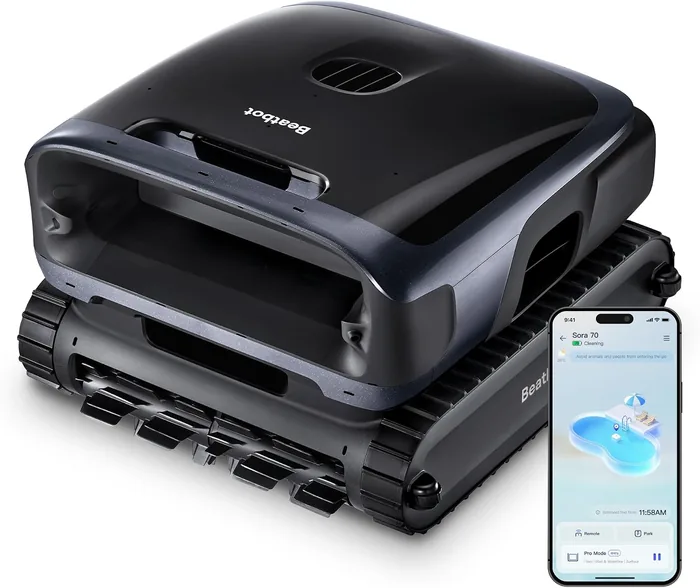
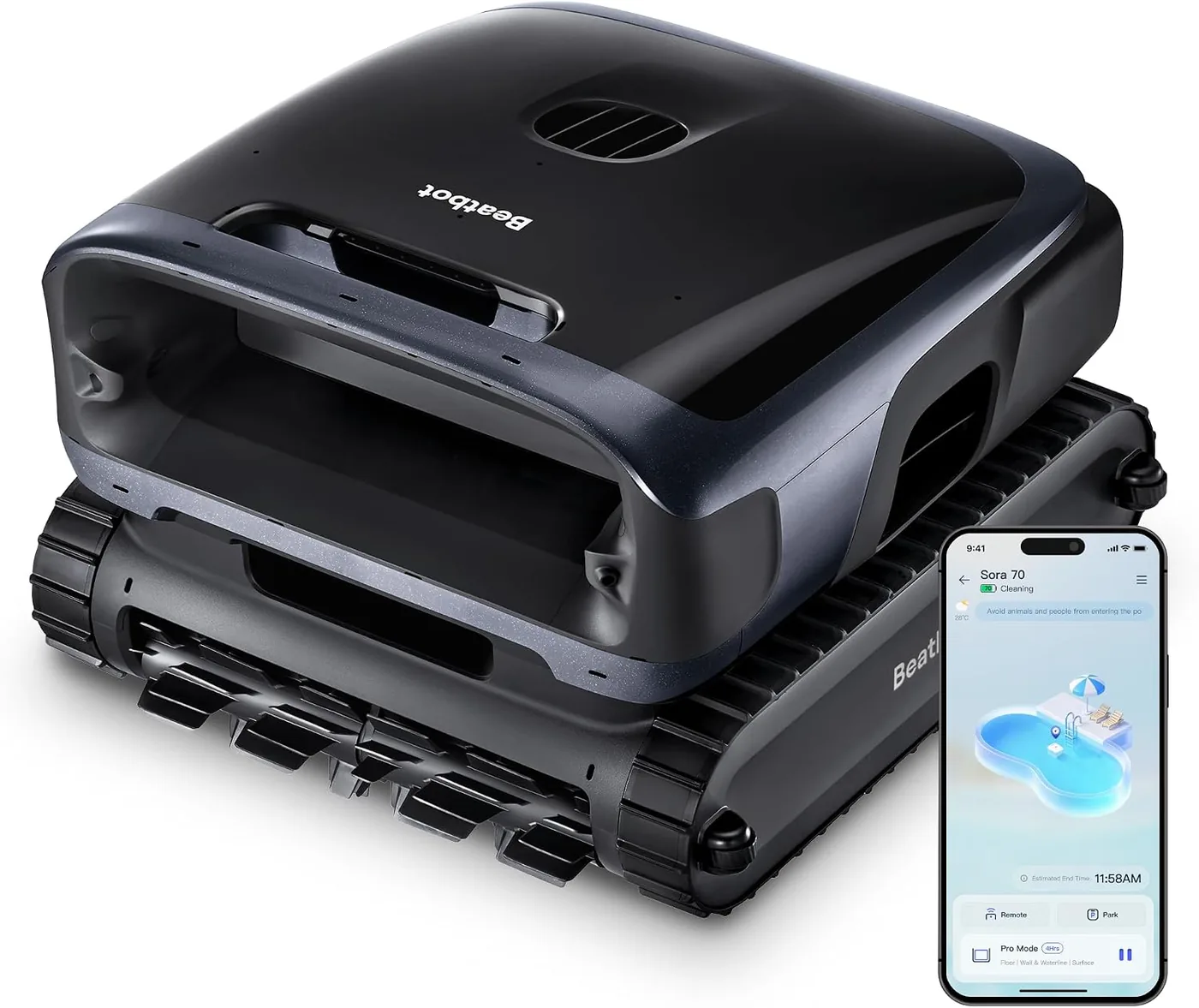
Beatbot Sora 70 robotic pool cleaner
Beatbot Sora 70 — top of this rankingManufacturer’s listing photograph, shown unaltered to identify this model. Property of its owner; no affiliation implied. Image credits
Which one is right for you?Match your situation, then read the full review below
Quick recommendations by household situation for pool cleaning robots
If this is youStart withWhy
Leaf-heavy poolsJetPulse pushes surface debris into the intake before it sinks — the only model here engineered for floating leaves.
Multi-level or irregular poolsAI camera mapping handles shapes and levels that pattern-following robots cannot adapt to.
Pools with a tanning ledge or platformUltrasonic sensors identify ledges and platforms instead of stranding on them.
Simple rectangular poolsFlagship-level suction, up to 300 minutes of runtime, and the easiest body in the range to handle.
Budget, or an above-ground pool
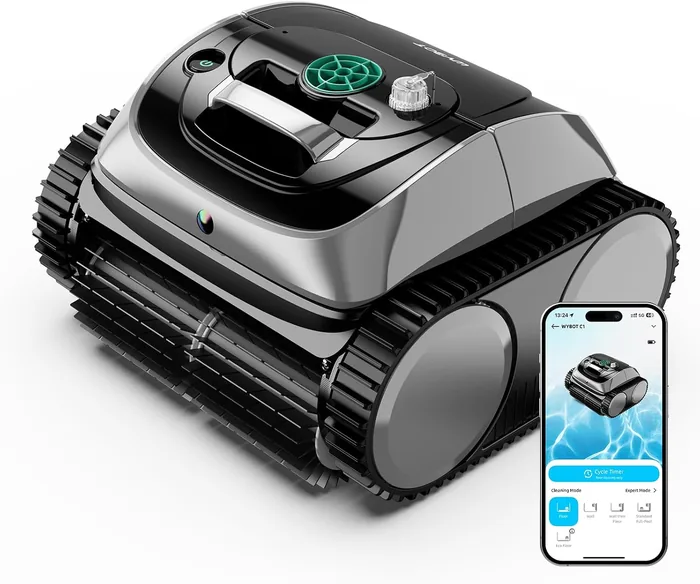
WYBOT C1 robotic pool cleaner
WYBOT C1
8.3 / 10
The lowest-cost cordless entry here, and one of the few that lists above-ground support.

Side-by-side comparison

Specifications as published by each manufacturer, cross-checked September 2026.

Pool Cleaning Robots compared on editorial score, published specifications and features
SpecBeatbot Sora 70
Editorial score 9.1 out of 10
Beatbot AquaSense 2 Ultra
Editorial score 9.0 out of 10
Beatbot Sora 30
Editorial score 8.9 out of 10
Beatbot Sora 10
Editorial score 8.7 out of 10
WYBOT C1
Editorial score 8.3 out of 10
Our score9.19.08.98.78.3
Best forLeaf-heavy poolsComplex shapesLedges, platformsSimple poolsBudget, above-ground
Published suction6,800 GPHNot published6,800 GPH6,800 GPHNot published
NavigationAI navigation, full-coverage planningAI mapping with onboard AI cameraUltrasonic sensing for ledges and platformsStandard coverage routingGyroscope, N-Path and S-Path patterns
Cleaning zonesSurface, waterline, floor, wallsFloor, walls, waterline, surface (5-in-1)Floor, waterline, walls, platformFloor, walls, waterlineFloor, walls, waterline (4-in-1)
Shallow-water depthDown to 8 inNot publishedLedges and platforms identified by sensorDown to 12 inNot published
Published runtimeUp to 5 hours (floor)Not publishedUp to 5 hours (floor)Up to 300 minutesUp to 160 minutes
Battery10,000 mAhNot published10,000 mAh7,310 mAhNot published
Coverage per chargeUp to 3,200 sq ftNot publishedLarge pools in one sessionUp to 3,229 sq ftNot published
RetrievalSurfaces, parks, drains water, stays afloatAuto-returns to water surfaceSurface parking; surfaces below 12% batteryHolds at waterline for ~10 minutesNot published
App controlYes — schedulingYes — schedulingYes — schedulingYes — schedulingYes — plus OTA firmware updates
Full reviewRead the full reviewRead the full reviewRead the full reviewRead the full reviewRead the full review

“Not published” means the manufacturer does not disclose that figure. We do not estimate missing specifications, and we do not publish prices — they change too quickly to keep honest. Where a measured result comes from third-party testing rather than a manufacturer claim, the row says so.

Every pool cleaning robot reviewed

Ordered by our editorial score, highest first. Each review covers the same ground: an overview, the published key specifications, what works, where it falls short, who it is for, and who should buy something else instead.

#1 · Pool RobotsBest overallBest for: Leaf-heavy pools and full-surface coverage
Beatbot Sora 70 robotic pool cleaner
Manufacturer’s listing photograph, shown unaltered to identify this model. Property of its owner; no affiliation implied. Image credits

Beatbot Sora 70

9.1 / 10Editorial score 9.1 out of 10, our editorial rubric

The one to buy when leaves are the actual problem — the JetPulse system pushes surface debris toward the intake before it ever has a chance to sink.

  • JetPulse dual water jets create four streams for surface debris
  • Up to 5 hours on floor cleaning from a 10,000 mAh pack
  • Covers up to 3,200 sq ft and reaches shallow areas to 8 in

Overview

Most pool robots clean the floor and call the job done. That leaves the single most visible mess — leaves and pollen sitting on the surface — to be skimmed by hand. The Sora 70 is built around closing that gap. Its JetPulse system uses dual water jets to create four streams that guide floating leaves and debris into the intake path, so the robot is working the surface and the floor in the same session rather than treating one as a bonus.

Underneath, the HydroBalance structure delivers 6,800 GPH and picks up heavy debris in a single pass without clogging — which is the specification that matters when you have actually watched a cheap robot stall on a mat of wet leaves. Coverage runs across the surface, waterline, floor and walls, and into shallow areas as low as 8 inches, so sun ledges and the top step are handled rather than skipped. Battery capacity is 10,000 mAh, rated for up to 5 hours on floor cleaning and up to 3,200 sq ft per charge.

Retrieval is the detail that separates good ownership from annoying ownership. At the end of a cycle the robot surfaces, parks at the pool edge, drains its internal water so it is light to lift, and stays afloat. You are not fishing a full-of-water machine off the bottom of the deep end.

Key specs

TypeCordless (rechargeable)
Published suction6,800 GPH (HydroBalance structure)
Surface cleaningJetPulse dual water jets creating four guiding streams
Cleaning zonesSurface, waterline, floor, walls
Shallow-area depthDown to 8 in
Battery10,000 mAh
Published runtimeUp to 5 hours (floor cleaning)
Coverage per chargeUp to 3,200 sq ft
RetrievalAuto-surfaces, parks at the waterline, drains internal water, stays afloat
App / remoteApp control with scheduling

What works

  • The only model here with an engineered answer to surface debris, not just floor debris
  • 6,800 GPH handles heavy leaf loads without clogging in a single pass
  • Reaches shallow areas down to 8 inches, so sun ledges and top steps are covered
  • Up to 5 hours of floor cleaning from a 10,000 mAh battery covers a large pool in one session
  • Drains itself before surfacing, which makes lifting it out genuinely easy

Where it falls short

  • Highest price tier in this comparison
  • Highest price in this comparison by a clear margin
  • Battery pack is a consumable that will need replacing after a few seasons

Who it's for

  • Pools surrounded by trees, where leaves are the recurring problem
  • Owners who currently skim the surface by hand after every cycle
  • Larger pools that need a full-surface-to-floor clean in one charge

Who should skip it

  • Small above-ground pools where a simpler robot covers everything in one short cycle
  • Owners who only ever need floor cleaning and never see surface debris
  • Buyers optimising purely on purchase price
How this score was built (9.1 / 10)
Cleaning performance9.26,800 GPH HydroBalance suction plus the JetPulse system for debris floating on the surface.
Coverage9.4The widest scope here: surface, waterline, floor, walls and shallow areas down to 8 inches.
Ease & maintenance9.0Surfaces itself, parks at the pool edge, drains internally and stays afloat for one-touch retrieval.
Value for the tier8.5Top of the range on price, and the surfacing and self-parking behaviour is what you are paying for.
Support & reliability8.4Established pool-robot specialist; battery pack is a long-term consumable.

Scores are produced from published specifications, independent third-party test results where they exist, and documented owner-reported reliability. We do not run our own laboratory tests — see How We Test.

Compare with alternatives

ModelScoreBest forReview
Beatbot AquaSense 2 Ultra9.0Multi-level pools and awkward shapesRead →
Beatbot Sora 308.9Pools with platforms, ledges and shallow endsRead →
WYBOT C18.3Cost-conscious buyers and above-ground poolsRead →

Sources & verification

  • Manufacturer-published specification and feature copy on the Beatbot Sora 70 US listing, September 2026
  • Beatbot product documentation cross-checked against listing copy, September 2026
  • Amazon US listing for this ASIN, read directly, September 2026

Specifications last checked: September 2026. Our recommendations are based on independent research and are not sponsored.
#2 · Pool RobotsBest for complex poolsBest for: Multi-level pools and awkward shapes
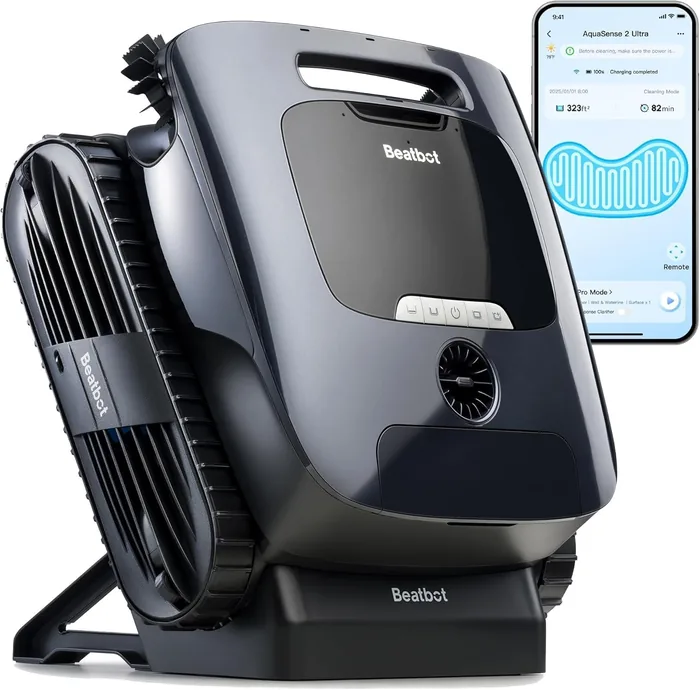
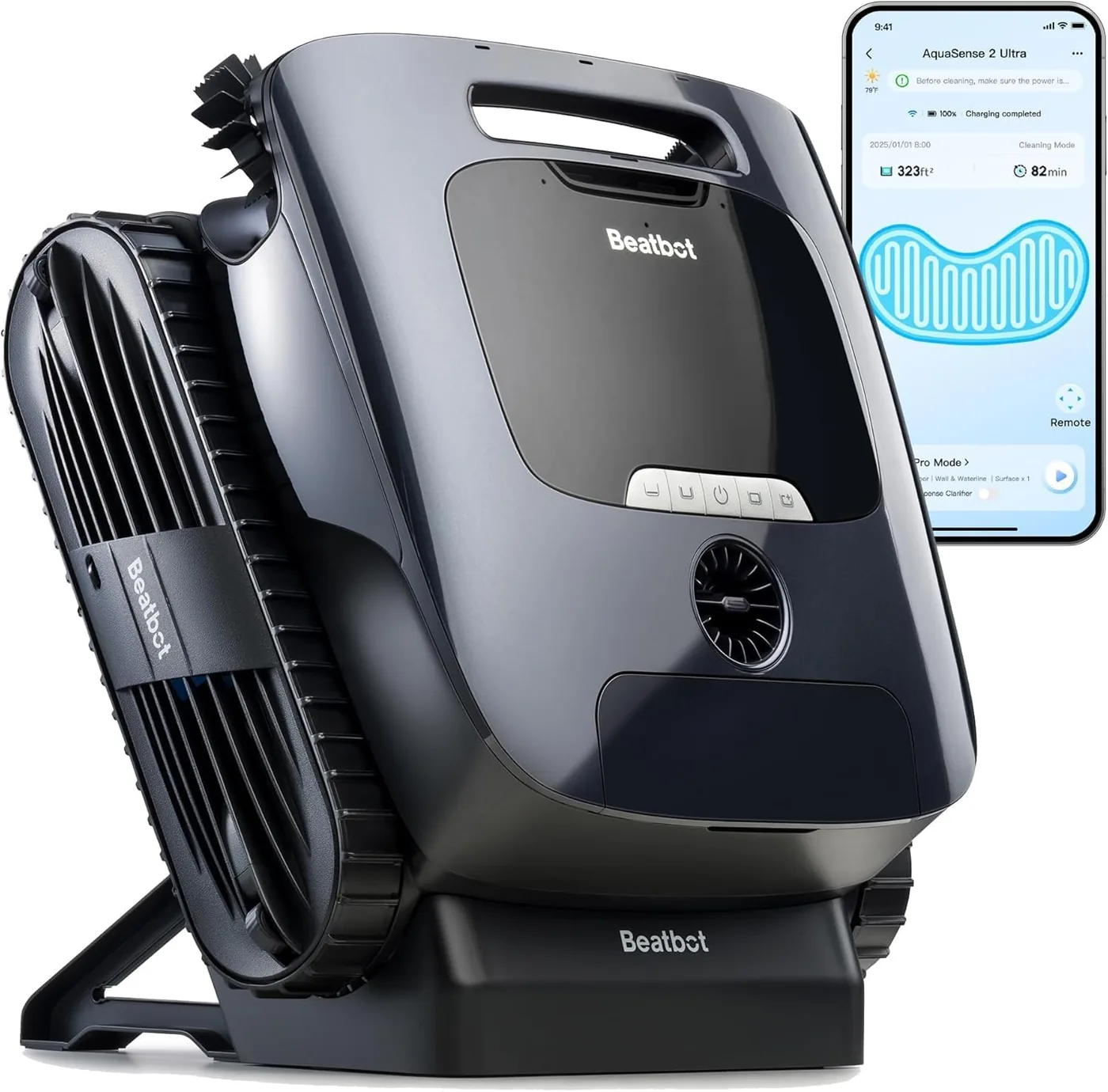
Beatbot AquaSense 2 Ultra robotic pool cleaner
Manufacturer’s listing photograph, shown unaltered to identify this model. Property of its owner; no affiliation implied. Image credits

Beatbot AquaSense 2 Ultra

9.0 / 10Editorial score 9.0 out of 10, our editorial rubric

The model for pools that are not simple rectangles — AI mapping, obstacle detection and plant-debris recognition handle multi-level layouts and odd shapes.

  • AI camera mapping with obstacle detection
  • Detects plant debris including leaves, berries and nuts
  • 5-in-1 cleaning with a claimed water-clarity benefit

Overview

A pool robot that cannot build an accurate picture of the pool will clean the parts it can reach, over and over, and leave the rest. That is the specific problem the AquaSense 2 Ultra is engineered around. It uses AI mapping with an onboard camera to navigate, detect obstacles and aim for full coverage rather than a repeating pattern — and because the mapping is visual, it handles the multi-level and irregular layouts that defeat pattern-following robots.

The plant-debris detection is a more pointed feature than it first appears. Berries and nuts sink and then stain; recognising them during floor cleaning, rather than treating them as generic debris, is the difference between clearing them and dragging them around. Coverage is described as 5-in-1 — floor, walls, waterline and surface — with an additional claim about improving water clarity, which is the kind of claim we would want to see measured rather than taken on faith.

Two practical notes. It is a heavier unit than the Sora models, and Beatbot sells an optional caddy for transport and storage — worth taking if you plan to move it between pools or store it out of the water. And the premium is concentrated in the navigation stack, so a simple rectangular pool will not return the extra cost.

Key specs

TypeCordless (rechargeable)
NavigationAI mapping with onboard AI camera, obstacle detection
Cleaning zonesFloor, walls, waterline, surface (5-in-1 system)
Debris recognitionAI plant-debris detection — leaves, berries, nuts
Pool shapes handledMulti-level pools and complex layouts
Water treatmentManufacturer claims a water-clarity benefit; no measured figure published
AccessoriesOptional caddy for transport and storage; alternatively a pool-care bundle
RetrievalAutomatic return to the water surface at end of cycle
Published runtimeNot published
Published suctionNot published

What works

  • AI mapping is a real advantage on irregular and multi-level pools
  • Plant-debris recognition targets the debris that stains rather than just the debris that looks messy
  • Optional caddy solves transport and off-season storage properly
  • Covers surface and waterline as well as floor and walls
  • Automatic surface parking makes retrieval straightforward

Where it falls short

  • Neither suction nor runtime is published on the listing, which makes it hard to compare on paper
  • Heavier than the Sora models — the caddy is close to essential if you move it
  • The water-clarity claim is not backed by a published measurement
  • Premium price is concentrated in navigation, which a simple rectangular pool will not exploit

Who it's for

  • Pools with multiple levels, spa spillways or an irregular shape
  • Owners whose pool sits near trees that drop berries or nuts
  • Anyone who needs to move the robot between pools or store it off-season

Who should skip it

  • Simple rectangular pools, where pattern-based navigation is already sufficient
  • Buyers who will not purchase a robot whose suction and runtime are undisclosed
  • Small above-ground pools
How this score was built (9.0 / 10)
Cleaning performance8.85-in-1 cleaning that also claims a water-clarity benefit rather than only debris pickup.
Coverage9.2AI mapping for obstacle detection and multi-level pools — the most capable navigation here.
Ease & maintenance9.1Optional caddy for transport and storage, plus automatic surface parking for retrieval.
Value for the tier8.4Premium pricing; the AI mapping is what you are paying for.
Support & reliability8.4Same platform as the Sora range with a larger, heavier body.

Scores are produced from published specifications, independent third-party test results where they exist, and documented owner-reported reliability. We do not run our own laboratory tests — see How We Test.

Compare with alternatives

ModelScoreBest forReview
Beatbot Sora 709.1Leaf-heavy pools and full-surface coverageRead →
Beatbot Sora 308.9Pools with platforms, ledges and shallow endsRead →
Beatbot Sora 108.7Straightforward pools that need reliable floor and wall cleaningRead →

Sources & verification

  • Manufacturer-published specification and feature copy on the Beatbot AquaSense 2 Ultra US listing, September 2026
  • Beatbot accessory documentation cross-checked against listing copy, September 2026
  • Amazon US listing for this ASIN, read directly, September 2026

Specifications last checked: September 2026. Our recommendations are based on independent research and are not sponsored.
#3 · Pool RobotsBest for pools with ledgesBest for: Pools with platforms, ledges and shallow ends
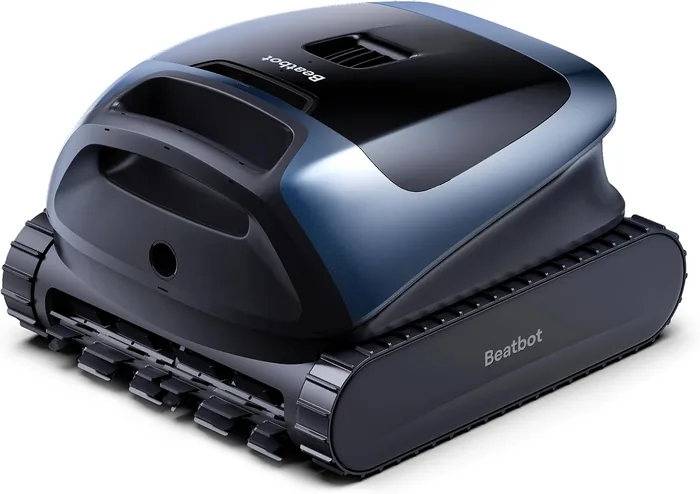
Beatbot Sora 30 robotic pool cleaner
Manufacturer’s listing photograph, shown unaltered to identify this model. Property of its owner; no affiliation implied. Image credits

Beatbot Sora 30

8.9 / 10Editorial score 8.9 out of 10, our editorial rubric

The one to choose if your pool has a platform or a tanning ledge — ultrasonic sensors identify ledges and shallow areas instead of driving over them blindly.

  • Ultrasonic sensors identify ledges, platforms and shallow areas
  • 4-zone cleaning: floor, waterline, walls and platform
  • Up to 5 hours on floor cleaning from a 10,000 mAh battery

Overview

A tanning ledge is the feature that most often defeats a pool robot. The robot drives onto it, loses its sense of the floor, and either strands itself or scrubs the same square metre of shallow water for the rest of the cycle. The Sora 30 addresses this directly with ultrasonic sensors that identify ledges, platforms and shallow areas and adapt the cleaning pattern to them — so a sun shelf gets cleaned as a distinct zone rather than as an accident.

It shares the 6,800 GPH HydroBalance suction structure with the range flagship, which means heavy debris like leaves is lifted in a single pass without clogging, and it cleans four zones: floor, waterline, walls and platform. Battery capacity is 10,000 mAh, rated for up to 5 hours of floor cleaning, and the debris capacity is a substantial 5 L.

The retrieval behaviour is the same family trait worth having: the robot rises to the surface when cleaning finishes or when the battery drops below 12%, which means you find it floating at the edge instead of searching the deep end. The one thing to weigh is that ultrasonic sensing is another subsystem that has to keep working over several seasons — it is the source of this model’s advantage and also its additional failure surface.

Key specs

TypeCordless (rechargeable)
Published suction6,800 GPH (HydroBalance structure)
Cleaning zonesFloor, waterline, walls, platform (4-zone)
Shallow-area handlingUltrasonic sensors identify ledges, platforms and shallow areas
Battery10,000 mAh
Published runtimeUp to 5 hours (floor cleaning)
Debris capacity5 L
Low-battery behaviourSurfaces automatically below 12% charge
RetrievalSmart water-surface parking with one-touch retrieval
App / remoteApp control with scheduling

What works

  • Explicit platform and ledge cleaning, which most competitors in this class do not attempt
  • Same 6,800 GPH suction as the range flagship at a lower price
  • Up to 5 hours of floor cleaning from a 10,000 mAh battery
  • Automatically surfaces when the battery drops below 12%, so it does not sit on the floor
  • 5 L debris capacity means fewer emptyings on a heavy leaf day

Where it falls short

  • Ultrasonic sensing is an extra subsystem that must survive several pool seasons
  • Surface debris is handled less thoroughly than on the JetPulse-equipped Sora 70
  • Not the right choice if your pool has no ledges or platforms to justify it

Who it's for

  • Pools with a tanning ledge, sun shelf or built-in platform
  • Owners with a shallow end that generic robots either strand on or skip
  • Large pools that need a long single-session runtime

Who should skip it

  • Simple pools with uniform depth, where the sensing has nothing to detect
  • Owners whose main problem is floating leaves rather than floor and ledge debris
  • Buyers who want the fewest possible subsystems to maintain
How this score was built (8.9 / 10)
Cleaning performance8.9Same 6,800 GPH HydroBalance structure as the Sora 70, with a 5 L debris capacity.
Coverage9.1Four-zone cleaning including platforms, which most robots in this class skip entirely.
Ease & maintenance8.9One-touch retrieval from the surface, plus automatic low-battery surfacing below 12%.
Value for the tier8.8Mid-tier price for the same suction as the range flagship.
Support & reliability8.4Ultrasonic sensing adds a component that needs to keep working; established brand support.

Scores are produced from published specifications, independent third-party test results where they exist, and documented owner-reported reliability. We do not run our own laboratory tests — see How We Test.

Compare with alternatives

ModelScoreBest forReview
Beatbot Sora 709.1Leaf-heavy pools and full-surface coverageRead →
Beatbot Sora 108.7Straightforward pools that need reliable floor and wall cleaningRead →
Beatbot AquaSense 2 Ultra9.0Multi-level pools and awkward shapesRead →

Sources & verification

  • Manufacturer-published specification and feature copy on the Beatbot Sora 30 US listing, September 2026
  • Beatbot sensing and retrieval documentation cross-checked against listing copy, September 2026
  • Amazon US listing for this ASIN, read directly, September 2026

Specifications last checked: September 2026. Our recommendations are based on independent research and are not sponsored.
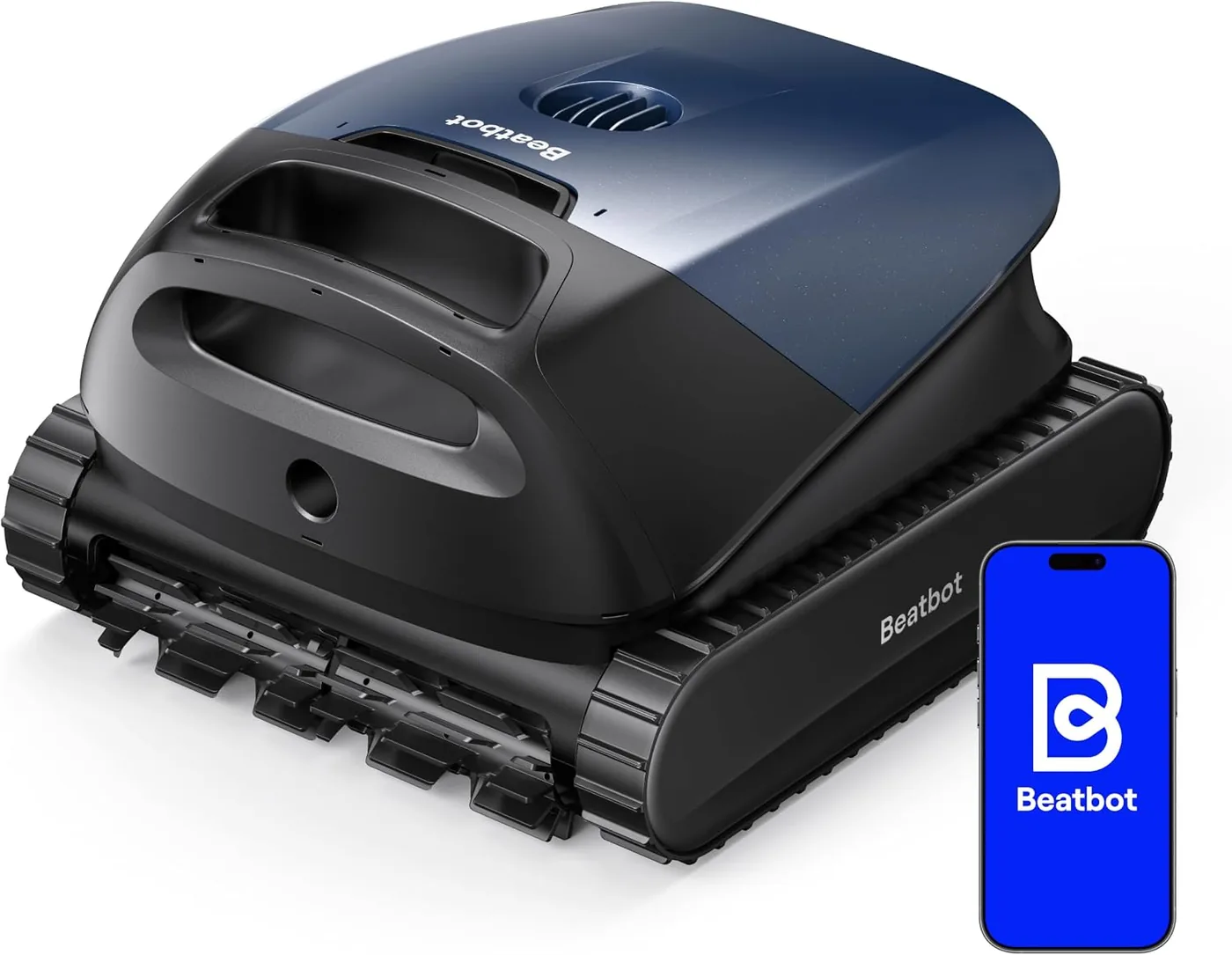
#4 · Pool RobotsBest for simple poolsBest for: Straightforward pools that need reliable floor and wall cleaning
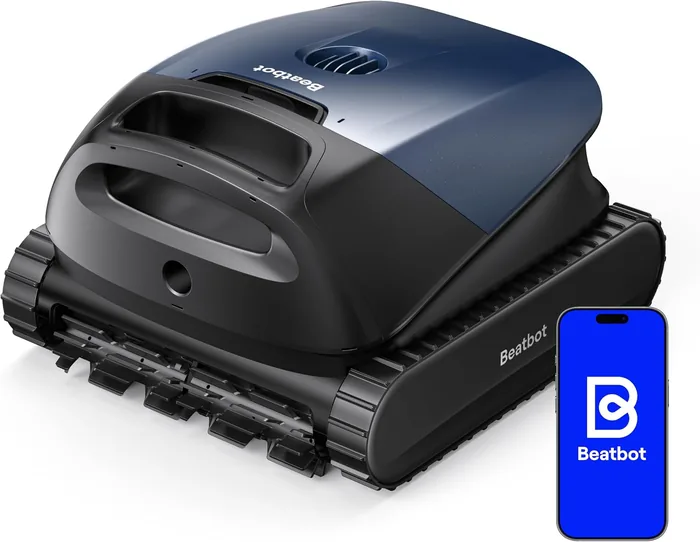
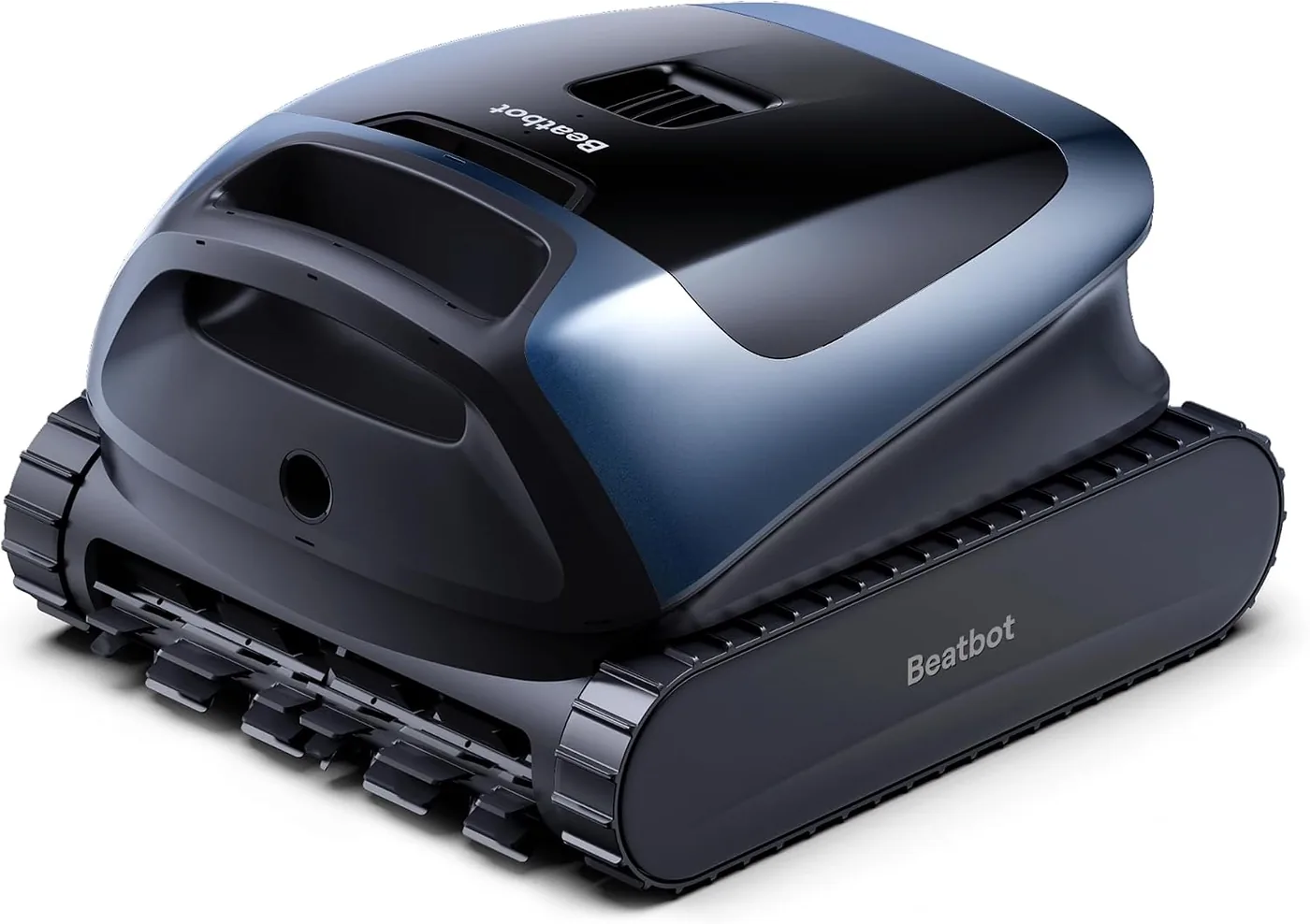
Beatbot Sora 10 robotic pool cleaner
Manufacturer’s listing photograph, shown unaltered to identify this model. Property of its owner; no affiliation implied. Image credits

Beatbot Sora 10

8.7 / 10Editorial score 8.7 out of 10, our editorial rubric

The simplest good robot in the range: same 6,800 GPH suction as the flagship, a lighter body, and enough runtime to cover a medium pool several times over on one charge.

  • Up to 300 minutes of continuous cleaning from a 7,310 mAh battery
  • Covers pools up to 3,229 sq ft
  • Cleans floor, walls and waterline, with shallow areas to 12 in

Overview

The Sora 10 makes a straightforward case: it uses the same HydroBalance suction structure as the models above it in the range, rated at 6,800 GPH to capture leaves, sand and debris without clogging, and it does the three jobs that actually matter on a normal pool — floor, walls and waterline. What it does not do is clean the surface, and it does not carry the ultrasonic sensing that lets the Sora 30 handle platforms.

Where it stands out is handling and runtime. The internal structure is deliberately balanced, which makes it the most agile and the easiest of the range to move in and out of the water — and that matters more than it sounds, because a robot that is awkward to retrieve is a robot that gets used less. The 7,310 mAh battery is rated for up to 300 minutes of continuous cleaning, covering pools up to 3,229 sq ft, and shallow areas as low as 12 inches are handled. At the end of the cycle it returns to the waterline and holds position for about 10 minutes for easy retrieval.

This is the model we would recommend to someone whose pool is a rectangle, whose main enemy is floor debris, and who would rather spend the difference on nothing at all. If you have a tanning ledge, step up to the Sora 30. If leaves float on the surface in volume, step up to the Sora 70.

Key specs

TypeCordless (rechargeable)
Published suction6,800 GPH (HydroBalance structure)
Cleaning zonesFloor, walls, waterline
Shallow-area depthDown to 12 in
Battery7,310 mAh
Published runtimeUp to 300 minutes
Coverage per chargePools up to 3,229 sq ft
RetrievalReturns to the waterline and holds position for about 10 minutes
Surface cleaningNot supported
App / remoteApp control with scheduling

What works

  • Same 6,800 GPH suction as the flagship models in the range
  • Up to 300 minutes of runtime covers a medium pool several times on one charge
  • Balanced structure makes it the easiest of the range to lift and handle
  • Shallow areas down to 12 inches are cleaned, not skipped
  • Fewer subsystems than the ultrasonic models, so less to go wrong

Where it falls short

  • No surface cleaning — floating leaves must still be skimmed
  • No ledge or platform sensing, so a tanning ledge is not handled specially
  • Wall climbing is present but this is not the range flagship for coverage

Who it's for

  • Rectangular pools with uniform depth where floor debris is the main problem
  • Owners who want the lowest-cost entry into the range without losing suction
  • Anyone who values easy physical handling over extra features

Who should skip it

  • Pools that accumulate floating leaves, which need surface cleaning
  • Pools with tanning ledges or platforms, which need the Sora 30 sensing
  • Owners who want the robot to handle every zone including the surface
How this score was built (8.7 / 10)
Cleaning performance8.86,800 GPH in a lighter, more agile body than the rest of the range.
Coverage8.7Floor, wall and waterline, plus shallow areas down to 12 inches. No surface cleaning.
Ease & maintenance9.0Balanced internal structure makes it the easiest of the range to handle in and out of the water.
Value for the tier8.9The entry point to the range, with the same suction as the models above it.
Support & reliability8.4Simpler than the ultrasonic models, so fewer subsystems to fail.

Scores are produced from published specifications, independent third-party test results where they exist, and documented owner-reported reliability. We do not run our own laboratory tests — see How We Test.

Compare with alternatives

ModelScoreBest forReview
Beatbot Sora 308.9Pools with platforms, ledges and shallow endsRead →
WYBOT C18.3Cost-conscious buyers and above-ground poolsRead →
Beatbot Sora 709.1Leaf-heavy pools and full-surface coverageRead →

Sources & verification

  • Manufacturer-published specification and feature copy on the Beatbot Sora 10 US listing, September 2026
  • Beatbot runtime and retrieval documentation cross-checked against listing copy, September 2026
  • Amazon US listing for this ASIN, read directly, September 2026

Specifications last checked: September 2026. Our recommendations are based on independent research and are not sponsored.

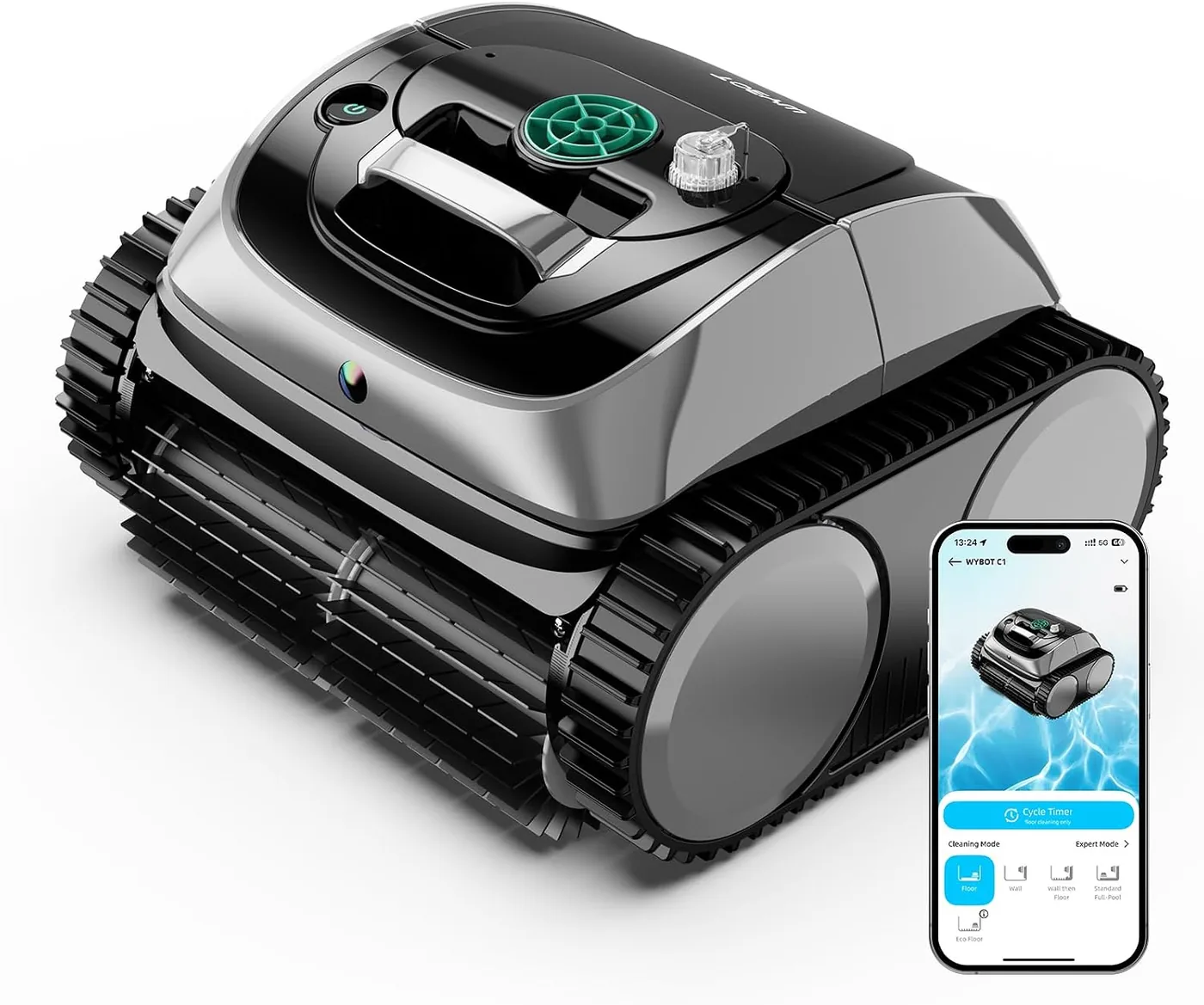
#5 · Pool RobotsBest valueBest for: Cost-conscious buyers and above-ground pools
WYBOT C1 robotic pool cleaner
Manufacturer’s listing photograph, shown unaltered to identify this model. Property of its owner; no affiliation implied. Image credits

WYBOT C1

8.3 / 10Editorial score 8.3 out of 10, our editorial rubric

A sensible first cordless pool robot: gyroscope routing instead of expensive mapping, 160 minutes of runtime, and a remote schedule you can set from the app.

  • 4-in-1 coverage for inground and above-ground pools
  • Up to 160 minutes runtime on a 4-hour charge
  • App scheduling plus over-the-air firmware updates

Overview

The C1 is the model we point people to when the budget is the constraint but a corded robot is not an option. Rather than mapping the pool with cameras or ultrasonic sensors, it navigates on a high-precision gyroscope and follows optimised N-Path and S-Path cleaning patterns. That is a cheaper and simpler way to achieve coverage, and on a reasonably regular pool shape it works well — you give up adaptation to odd geometry rather than giving up coverage altogether.

It covers the standard four jobs and runs for up to 160 minutes on a four-hour charge, which is enough for a typical residential pool with margin. App control lets you schedule runs and track progress remotely, and over-the-air firmware updates mean the software can improve after purchase — a genuinely useful thing at this price point, where products are often abandoned at launch firmware. The listing positions it for both inground and above-ground pools, which is unusual at this tier.

Two honest caveats. The owner rating on the listing is 4.0 out of 5, the lowest in this comparison, and a wall-climbing cordless robot is a demanding application — the battery is usually the first component to lose capacity. Suction and battery capacity are both undisclosed, so you are buying on the runtime figure and the coverage pattern rather than on measured cleaning power.

Key specs

TypeCordless (rechargeable)
NavigationHigh-precision gyroscope with optimised N-Path and S-Path patterns
Cleaning zonesFloor, walls, waterline (4-in-1 coverage)
Pool typesInground and above-ground
Published runtimeUp to 160 minutes
Charge timeAbout 4 hours
App / remoteWYBOT app — scheduling, modes, progress tracking, OTA firmware updates
Published suctionNot published
Battery capacityNot published
Owner rating (listing)4.0 out of 5

What works

  • The lowest-cost route into a cordless pool robot in this comparison
  • 160 minutes of runtime with a four-hour charge is practical for a normal pool
  • App scheduling and OTA firmware updates are unusual at this price
  • Works with above-ground pools as well as inground
  • Gyroscope routing avoids the cost of camera or ultrasonic mapping

Where it falls short

  • Lowest owner rating in this comparison at 4.0 out of 5 on the listing
  • Pattern-based navigation will not adapt to irregular or multi-level pools
  • Suction and battery capacity are not published, so it cannot be compared on paper
  • No surface cleaning and no ledge sensing

Who it's for

  • Buyers who want cordless convenience at the lowest sensible price
  • Above-ground pool owners, who are poorly served by premium robots
  • Regular pool shapes where pattern-based navigation is sufficient

Who should skip it

  • Irregular or multi-level pools that need genuine mapping
  • Owners who want surface debris handled as part of the cycle
  • Buyers who will not purchase a robot with undisclosed suction and battery figures
How this score was built (8.3 / 10)
Cleaning performance8.04-in-1 coverage with a gyroscope navigation system rather than mapping sensors.
Coverage8.2Floor, wall and waterline routes on a described N-Path and S-Path pattern.
Ease & maintenance8.5Up to 160 minutes on a 4-hour charge, with app scheduling and OTA firmware updates.
Value for the tier9.2The cheapest way into a cordless pool robot here, by a wide margin.
Support & reliability8.0Wall-climbing cordless robots work hardest; expect the battery to be the first thing to fade.

Scores are produced from published specifications, independent third-party test results where they exist, and documented owner-reported reliability. We do not run our own laboratory tests — see How We Test.

Compare with alternatives

ModelScoreBest forReview
Beatbot Sora 108.7Straightforward pools that need reliable floor and wall cleaningRead →
Beatbot Sora 308.9Pools with platforms, ledges and shallow endsRead →
Beatbot Sora 709.1Leaf-heavy pools and full-surface coverageRead →

Sources & verification

  • Manufacturer-published specification and feature copy on the WYBOT C1 US listing, September 2026
  • WYBOT app and firmware documentation cross-checked against listing copy, September 2026
  • Owner rating as published on the Amazon US listing for this ASIN, September 2026

Specifications last checked: September 2026. Our recommendations are based on independent research and are not sponsored.

Buying guide: choosing a pool cleaning robot

How to read the specifications above, what each one tells you about daily life, and the measurements worth taking in your own home before you decide.

1Three specs decide most of it

Suction in gallons per hour tells you how heavy a debris load the robot can lift in one pass. 6,800 GPH is the current top of the residential range and it is rated for leaves and sand without clogging; cheaper units publish lower figures or none at all.

Runtime and coverage area tell you whether the robot finishes before the battery does. Rated runtime runs from about 160 minutes to five hours here, and coverage from roughly 2,100 to 3,200 square feet per charge.

Coverage zones tell you what it will pretend not to see. Floor only is the bare minimum; floor plus walls and waterline is the practical standard; surface cleaning is a separate, rarer capability and only one model here has an engineered system for it.

2Shallow water and ledges are where robots fail

A tanning ledge, sun shelf or built-in platform is the classic failure mode. The robot drives onto it, loses floor reference, and scrubs the same shallow patch. If your pool has one, buy a model that senses it — ultrasonic sensing is the mechanism to look for.

Published shallow-water depth matters too. Ratings in this comparison reach down to 8 inches on one model and 12 inches on another, and an unlisted number should be treated as unknown rather than generous.

3Get the retrieval behaviour right before anything else

A pool robot full of water is heavy, and one on the bottom of the deep end is worse. The behaviours worth insisting on are: automatically rising to the surface at the end of a cycle or on low battery, parking at the waterline, and draining internally so it is light to lift.

This is the single most under-specified feature in the category and the one that most affects whether you keep using the robot in season two.

4Cordless versus corded

Corded robots run indefinitely on mains power and historically handled larger pools with fewer battery constraints. Cordless robots now match them on coverage in one charge and remove the permanent cable run, the transformer box and the trip hazard.

All five models in this comparison are cordless. If your pool is unusually large, check the published coverage-per-charge figure against your pool size rather than assuming a battery will last; the numbers here run from about 2,100 to 3,200 square feet.

5Winterising and battery life

The battery is the first component to fade in a cordless pool robot, and a wall-climbing unit works its pack hard. Expect to treat the battery as a consumable over a few seasons, and check that replacements are sold for the model you are considering.

Storage matters as much as use. Charge to roughly half before storing for the off-season rather than leaving it full or flat, and store it out of direct sun — a caddy helps if you have one, and one model here offers it as an accessory.

Pool Cleaning Robots: frequently asked questions

The questions we are asked most often about this category, answered without hedging.

What is the best pool cleaning robot in 2026?

It depends on what your pool actually does. For a leaf-heavy pool the Beatbot Sora 70 scores highest in our rubric because the JetPulse system addresses floating debris rather than only the floor. For an irregular or multi-level pool, the AquaSense 2 Ultra’s AI mapping is the more useful capability. For a straightforward rectangular pool the Sora 10 is the better-value purchase.

Are cordless pool robots as good as corded ones?

For residential pools, generally yes. Cordless models now publish runtimes of up to five hours and coverage of around 3,200 square feet per charge, which covers most home pools in a single session, and they eliminate the permanent cable run and external transformer a corded robot needs. Check the published coverage figure against your pool size rather than assuming, since not every model publishes one.

How do pool robots handle a tanning ledge or platform?

Most handle them badly, which is why it is worth checking before you buy. A robot without shallow-water sensing will drive onto a ledge, lose its floor reference and clean the same small area repeatedly. Models with ultrasonic sensing identify ledges, platforms and shallow areas and adapt the pattern. One model in this comparison cleans platforms as a named fourth zone.

Does suction in GPH matter more than runtime?

They solve different problems, so the answer depends on your debris. GPH determines whether heavy debris like leaves and sand is lifted in one pass without clogging — 6,800 GPH is the top of the residential range today. Runtime determines whether the robot covers the whole pool before the battery dies. A high-suction robot that runs out halfway is worse than a moderate one that finishes.

How long do pool robot batteries last?

Expect the battery to be the first thing to degrade, typically over a few seasons of regular use, and faster on wall-climbing models because they work the pack harder. Before buying, confirm that replacement batteries are sold for that specific model. For storage, charge to roughly half rather than full or empty, and keep the unit out of direct sun.

Can a pool robot clean the water surface?

Only a few can. Most clean the floor, walls and waterline, and leave floating leaves to be skimmed by hand. Surface cleaning requires an engineered mechanism — the most developed approach in this comparison uses dual water jets creating four streams that guide floating debris into the intake. If surface debris is your main complaint, this is the one capability worth paying for.

Do pool robots work in saltwater pools?

They generally do, but confirm it on the specific model rather than assuming. Salt water is corrosive to seals, connectors and charging contacts over time, so corrosion-resistant materials and sealed charging ports matter. Some models advertise freshwater and saltwater operation explicitly, and that statement is worth having in writing before you buy.

How much maintenance does a pool robot need?

Expect to rinse the filter basket or cartridge after most cycles, check the brush and track condition, and clear the impeller of hair and fine debris. Debris capacity varies noticeably between models — one here holds 5 litres, which reduces how often you empty it on a heavy leaf day. Filters and brushes are consumables, so check availability before committing.

Should I buy a pool robot with an app?

An app is convenient for scheduling and checking progress, but it is not essential to cleaning performance. What is worth more is over-the-air firmware updating, which lets the manufacturer improve navigation and cleaning logic after purchase — one model here offers it at the entry price point, and that is a meaningful hedge against buying abandoned software.

How do I choose between similar models from one brand?

Pick by the specific thing your pool does that is hard. If leaves float, buy surface cleaning. If you have a ledge, buy shallow-water sensing. If the pool is an irregular shape, buy real mapping rather than pattern routing. If none of those applies, buy the cheapest model with the suction you need and keep the difference.

Related buying situations

Other categories

Our recommendations are based on independent research and are not sponsored. SmartHomeVerdict does not publish prices and does not use affiliate links. Specifications were checked against manufacturer documentation in September 2026; where a brand does not disclose a figure we mark it “Not published” rather than estimating it.