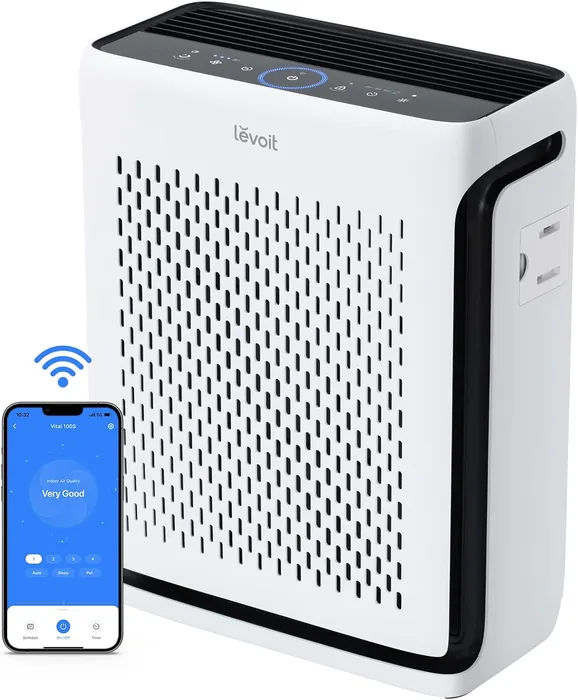
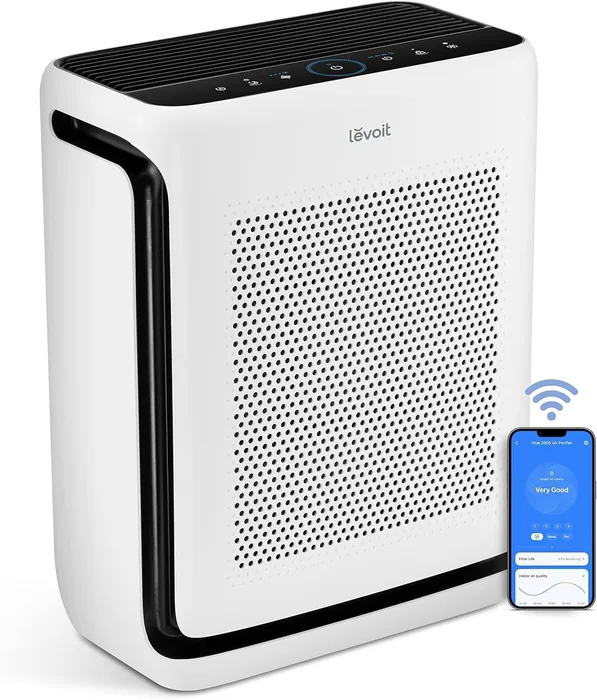
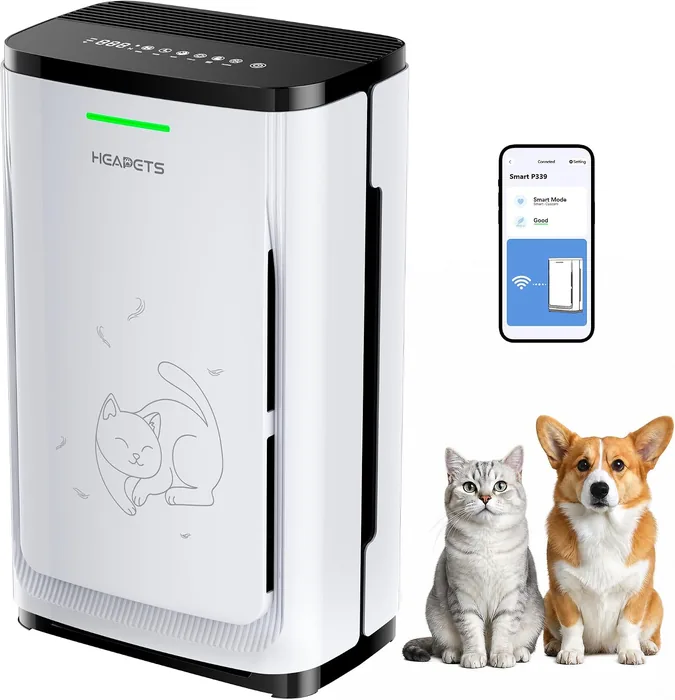
| CADR (clean air delivery rate) | Cubic feet per minute of clean air delivered, measured under an independent certification programme. It is the only fair performance comparison between purifiers. | An AHAM-verified CADR figure where one is published, and divide it by 3 for the room size you can treat at allergy-grade air change rates. Where no CADR is given, AHAM Verifide certification plus a stated air-change rate is the next best evidence — one model here states 4.8 changes per hour in rooms up to 222 sq ft. |
|---|
| Air changes per hour (ACH) | How many times the purifier replaces the air in the room each hour. Allergy and asthma guidance generally recommends 4 to 5 ACH. | Plan for 4.8 ACH. A 250 sq ft bedroom needs roughly 150 CADR; a 500 sq ft living area, roughly 300. |
|---|
| Filter stages and HEPA rating | A washable pre-filter protects the expensive stages; True HEPA captures 99.97% of particles at 0.3 microns; activated carbon handles odours and gases. | True HEPA plus a washable pre-filter. For odour or smoke, weigh the carbon quantity rather than counting stages. |
|---|
| Carbon volume | Pollen season aside, odours and VOCs are removed by activated carbon, and a thin pad saturates in weeks. Volume, not the stage count, determines how well it works and how long it lasts. | A substantial carbon stage if smoke, cooking or pet odour is part of the problem. |
|---|
| Low-speed noise | The speed you can tolerate determines how many hours a day the purifier runs, and therefore how much of the CADR you actually get. | 25 to 27 dB on low is what the quiet models in our comparison publish, and both are rated for a bedroom. Above roughly 45 dB on the setting you need, it becomes a daytime-only machine. |
|---|
| Ioniser or plasma stage | Some units add bipolar ionisation to help with odours. These stages can produce trace ozone and must meet California certification limits to be sold there. | A CARB-certified stage that can be switched off — or a model with no ioniser at all if you would rather not think about it. HEPA performance is unaffected either way. |
|---|